Knot Relief Program in Lighthouse Point, FL
For the knot in your shoulder that massage keeps fixing for a day.
- ✓Shockwave therapy + therapeutic ultrasound
- ✓Traps, rhomboids, shoulder, glutes and hips
- ✓Treats what causes the knot, not just the tightness
- ✓No injections, no downtime
A muscle knot is a band of muscle fibre that has contracted and stopped letting go. Circulation through the band drops, the tissue becomes fibrous, and the spot turns tender to press and starts referring pain outward — into the neck, the head, down the arm, or across the low back, depending on where it sits.
Most people arrive at McNamara Chiropractic Center having already spent real money on this. Massage, repeatedly. A foam roller. A massage gun. Each one helps for a day or two, because each one is treating how the muscle feels rather than why it is stuck that way.
The Two-Modality Approach
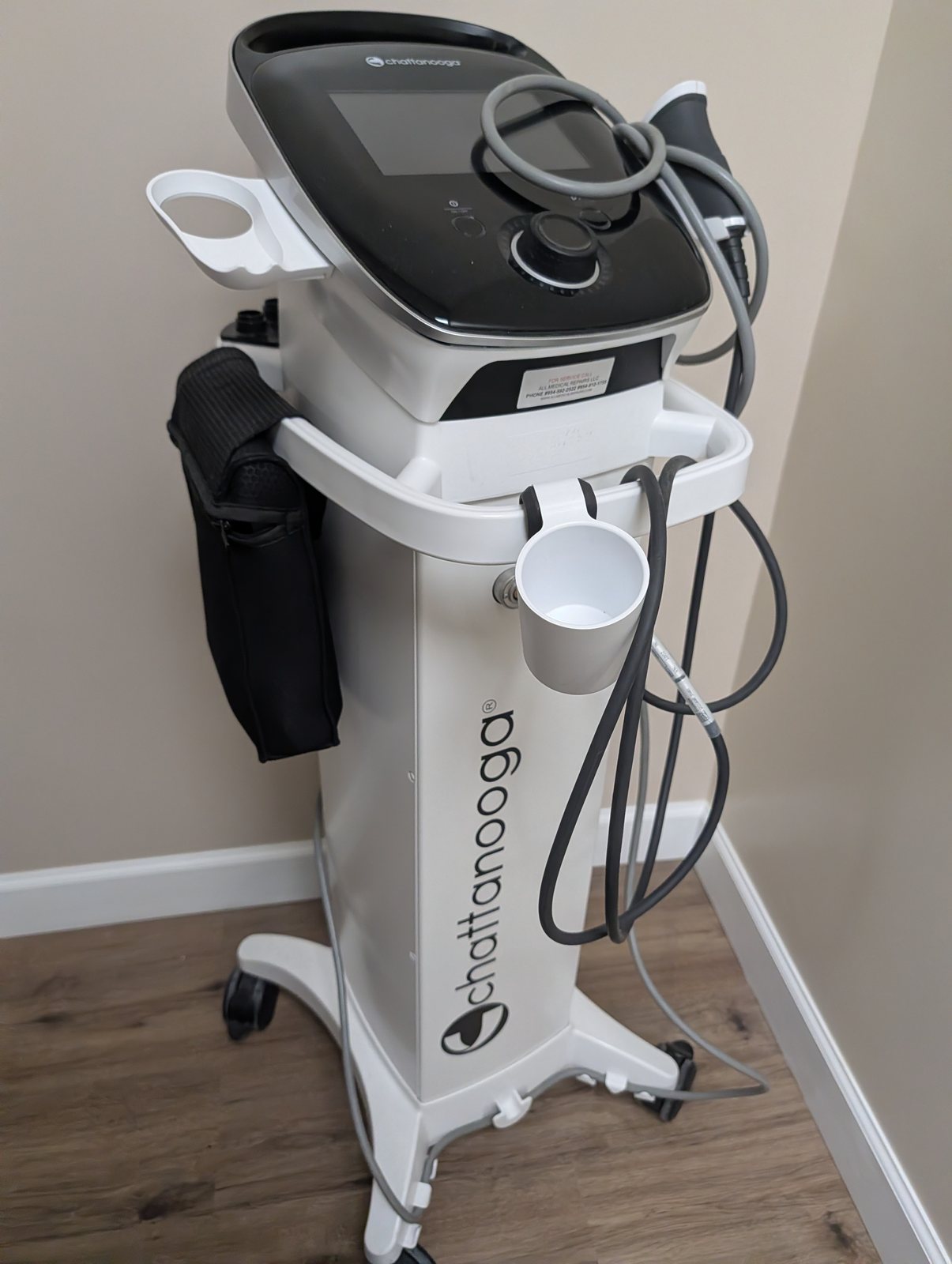
Shockwave Therapy
Focused acoustic pressure waves are delivered into the muscle. They break down the fibrous adhesions holding the knot together, and they trigger neovascularization — the growth of new blood vessels in tissue that had lost its supply. Restoring that circulation is what stops the knot from simply re-forming. Because the tissue needs recovery time between applications, shockwave is spaced out across your course of care rather than used at every visit.
Therapeutic Ultrasound
Deep sound-wave heating raises local blood flow and makes the muscle more pliable, which both eases the tightness and helps the tissue respond to the shockwave. It is comfortable, painless, and used at every visit. This is therapeutic ultrasound — treatment, not the diagnostic ultrasound used for imaging.
Areas We Treat
- Trapezius — across the top of the shoulders and up into the neck
- Rhomboids — between the shoulder blades, the classic desk-work knot
- Shoulder — around the joint and the surrounding musculature
- Glutes — deep knots that often masquerade as hip or low-back pain
- Hips — including greater trochanteric pain
One Modality Per Area
Class IV laser and shockwave are never applied to the same area of the body. That is a firm clinical rule here. It is also why this program combines easily with others: if you are in the Spinal Decompression Program for your low back or the Knee Restoration Program for your knee, knots elsewhere can be treated in the same week without conflict. Dr. McNamara maps out which areas get which modality at your evaluation.
Frequently Asked Questions
What actually is a muscle knot?
A muscle knot is a tight, tender band of muscle fibre that has stopped releasing on its own. The tissue stays contracted, circulation through it drops, and the area becomes both painful to press and a source of referred pain elsewhere — which is why a knot between the shoulder blades can produce a headache.
Why does massage help for a day and then the knot comes back?
Massage works on the symptom. It manually pushes blood through the tissue and the muscle relaxes for a while, but nothing has changed about the tissue itself, so it re-tightens. Shockwave and therapeutic ultrasound work on what is causing the knot — the adhesion in the tissue and the poor circulation feeding it.
How does shockwave therapy break up a knot?
Shockwave delivers focused acoustic pressure waves into the muscle. The waves break down the fibrous adhesions holding the knot together and trigger neovascularization — new blood vessel growth — in tissue that had lost its blood supply. That restored circulation is what stops the knot re-forming.
What does the therapeutic ultrasound add?
Therapeutic ultrasound delivers deep sound-wave heating into the muscle, which increases local blood flow and makes the tissue more pliable. It is used at every visit alongside the shockwave sessions. This is therapeutic ultrasound for treatment — not the diagnostic ultrasound used for imaging.
Which areas does the program treat?
The most common are the trapezius across the top of the shoulders, the rhomboids between the shoulder blades, the shoulder itself, the glutes, and the hips. Dr. McNamara identifies the specific areas at your evaluation.
Is it painful?
Shockwave over an active knot is briefly uncomfortable — most patients describe it as a deep, tolerable ache that eases as the session goes on. The therapeutic ultrasound is painless and feels warm. There is no downtime afterward.
Can I do this at the same time as care for my back or knee?
Yes, and many patients do. Class IV laser and shockwave are never applied to the same area, but different areas can be treated in the same week. A patient in the Spinal Decompression Program for their low back can have knots in their traps treated alongside it.
How many visits will I need?
Dr. McNamara sets your course of care at the evaluation, based on how many areas are involved and how long they have been there, and reassesses as you progress.
Do you treat knots that came from a car accident?
Yes. Chronic muscle tightening is common after a collision. If you are being treated under Florida PIP for an auto-accident injury, ask about it at your evaluation — treatment must begin within 14 days of the accident to protect those benefits.
When is this not the right treatment?
Shockwave is not used over acute injuries, open wounds, areas of active infection, or where a tumor is suspected, and it is not appropriate during pregnancy or over a region with a blood-clotting disorder. If your pain is coming from a disc, a joint, or a nerve rather than the muscle, Dr. McNamara will tell you that at the evaluation and point you to the right program instead.
Call (954) 902-6371 or request a consultation. We're at 3320 N. Federal Highway, Lighthouse Point, FL 33064 — free parking in front, entrance on the side of the building.
New Patient Program Evaluation
$165$89
Limited time offer.
- A full examination with Dr. Carol McNamara-Krauss, DC
- Your first treatment the same visit — shockwave therapy
- Had an X-ray or MRI in the last two years? Dr. McNamara reads it and advises you on your options.
- Haven’t? You leave with a referral for imaging — and your report-of-findings follow-up visit is included too.
- And the $89 is credited toward any treatment plan you start.
Cash-pay program — not billed to insurance.