Shockwave Therapy in Lighthouse Point, FL
Focused acoustic waves that restart healing in chronic tendon and soft-tissue pain.
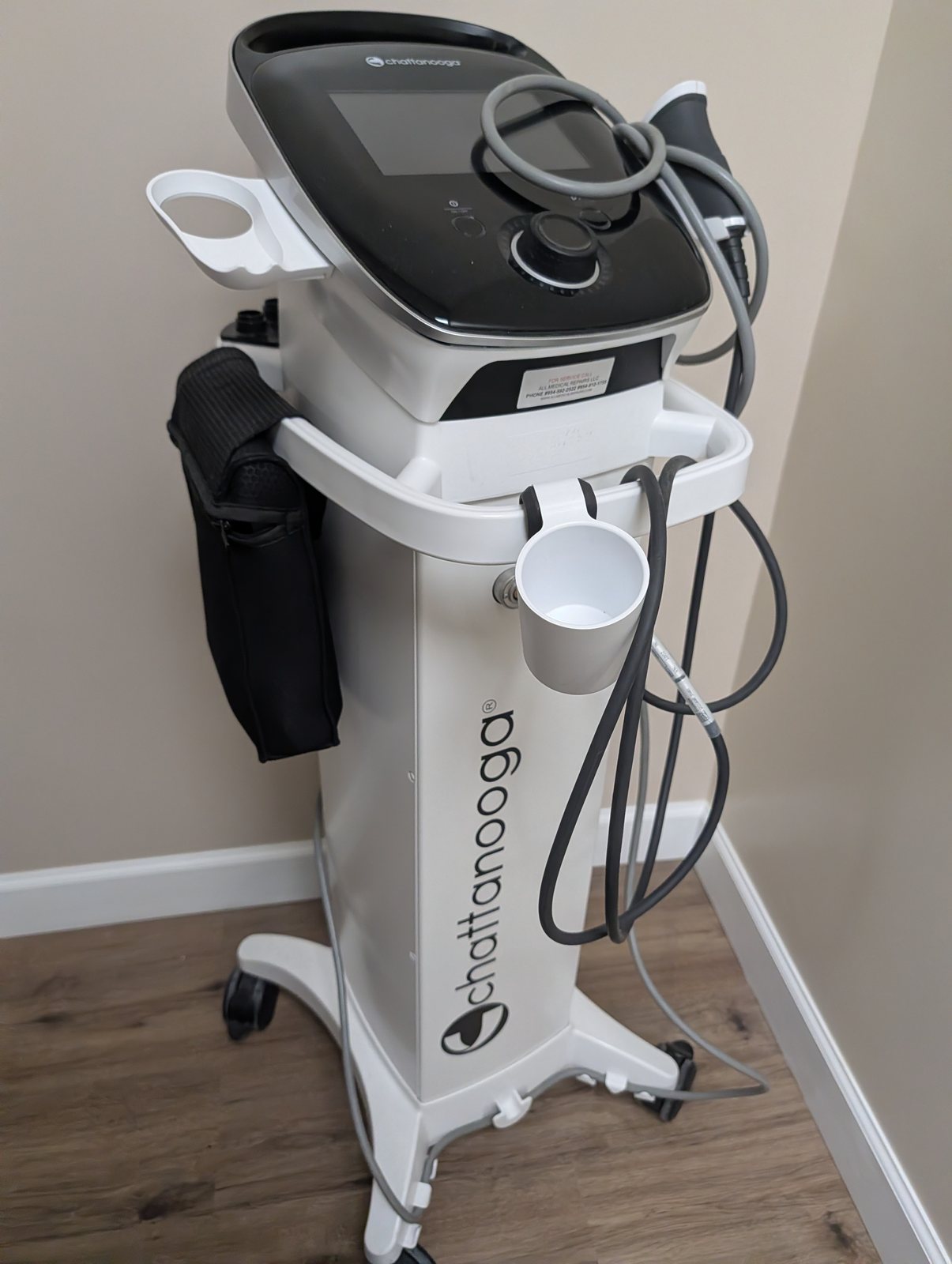
- ✓Chattanooga® shockwave (ESWT) system
- ✓Plantar fasciitis, chronic muscle knots, tennis elbow & Achilles
- ✓Short in-office sessions with no downtime
- ✓Sessions spaced so tissue can recover between them
Shockwave therapy — formally called extracorporeal shockwave therapy (ESWT) — is one of the most evidence-supported non-surgical treatments available for chronic musculoskeletal conditions. At McNamara Chiropractic Center, it's one of the core therapies in both the flagship programs and standalone treatment.
What Is Shockwave Therapy?
Shockwave therapy uses a handheld applicator to deliver focused acoustic pressure waves into damaged tissue. These are not electrical shocks — the name refers to the mechanical pressure wave generated by the device.
The waves penetrate tissue at specific depths, creating a controlled mechanical stimulus that triggers several healing mechanisms:
Neovascularization: Shockwave stimulates the formation of new blood vessels (neovascularization) in tissue that has been in a chronic, poorly-vascularized state. Tendons, fasciae, and other fibrous structures have limited blood supply — new vessel formation restores the healing environment.
Fibroblast activation: Fibroblasts produce collagen — the structural protein of tendons and ligaments. Shockwave activates quiescent fibroblasts and directs the production of organized, structurally sound collagen to replace the disorganized degenerated tissue that characterizes chronic tendinopathy.
Calcification dissolution: For calcific tendinitis of the shoulder and other calcium deposits in soft tissue, focused shockwave breaks up the calcium mechanically while simultaneously stimulating resorption.
Pain modulation: Shockwave reduces substance P and other pain mediators, producing both immediate and lasting pain reduction. The "counter-irritant" mechanism also plays a role in breaking the chronic pain-spasm cycle.
Conditions Treated with Shockwave
- Plantar fasciitis — One of the strongest evidence indications; especially for chronic cases where other treatments have failed
- Lateral epicondylitis (tennis/pickleball elbow) — Chronic tendinopathy that has outlasted standard conservative care
- Achilles tendinopathy — Both insertional and mid-portion presentations
- Chronic muscle knots ("jumper's knee")
- Greater trochanteric pain syndrome — Hip tendinopathy affecting the gluteal tendons
- Frozen shoulder — As a component of the Shoulder Restoration Program
- Chronic paraspinal involvement — As part of the Spinal Decompression Program
What a Shockwave Session Is Like
After the treatment area is identified, an ultrasound gel is applied to the skin. The applicator is moved across the targeted tissue in a systematic pattern while pulses are delivered. Sessions typically last 5–15 minutes depending on the area and protocol.
The treatment can be briefly uncomfortable over very tender areas — that's expected and is part of the mechanism. Most patients tolerate it well. There is no recovery time; you can drive yourself home and return to normal activities the same day.
Dr. McNamara sets your course of care at the evaluation, and spaces the sessions so the tissue has time to recover between them.
Shockwave as Part of a Program
At McNamara Chiropractic Center, shockwave is used both as a standalone therapy and as a component of:
- Spinal Decompression Program — Combined with Antalgic-Trac® and Class IV laser
- Shoulder Restoration Program — Combined with Class IV laser
- Plantar Fasciitis Treatment — Combined with Class IV laser
- Sports Injury Recovery Program — Combined with Class IV laser
Shockwave Therapy FAQs
What is shockwave therapy?
Shockwave therapy — formally extracorporeal shockwave therapy (ESWT) — uses focused acoustic pressure waves to stimulate healing in damaged tissue. These are mechanical pressure waves, not electrical shocks. It's effective for plantar fasciitis, chronic muscle knots, and tendon problems where normal healing has stalled.
What conditions does shockwave therapy treat?
Shockwave is most useful for chronic soft-tissue and tendon problems that haven't responded to rest, physical therapy, or injections. Common indications include plantar fasciitis and heel pain, stubborn muscle knots in the traps, rhomboids, glutes and hips, Achilles tendinopathy, tennis and golfer's elbow, and greater trochanteric (hip) pain syndrome. Shockwave is never applied to an area being treated with Class IV laser — Dr. McNamara selects one or the other for each area, and evaluates your specific case before recommending it.
Is shockwave therapy painful?
Shockwave can be briefly uncomfortable over tender or calcified areas — most patients describe a deep, rapid tapping. Sessions are short and the energy is adjusted to your tolerance. The transient discomfort is part of the therapeutic mechanism, and there's no downtime afterward.
How well does shockwave therapy work?
Across musculoskeletal conditions, published success rates generally run about 60–80%, with plantar fasciitis among the strongest responders. It works best for chronic, hard-to-treat cases. Results build progressively — most tissue healing occurs over 6–12 weeks rather than immediately.
How many shockwave sessions will I need?
A standalone course is typically 3–6 sessions spaced about 5–7 days apart, so the tissue has time to heal between treatments. Within a multi-modality program the number varies per protocol. Dr. McNamara sets the exact plan after examining you.
How soon will I know it's working?
Some patients feel relief early; most notice clearer improvement — less pain, better range of motion, easier daily activity — by the third or fourth session. Mild soreness for a day or two after a session is normal and a sign the healing response has been triggered. The most durable gains typically appear over 6–12 weeks.
Who should not have shockwave therapy?
Shockwave isn't right for everyone. It's avoided during pregnancy, over tumors or active infections, near a pacemaker or other implanted electronic device, over open growth plates in children or a fresh fracture, and it's used with caution if you take blood thinners or have a bleeding disorder. Dr. McNamara confirms you're a safe candidate before starting.
What should I avoid before and after a session?
Because shockwave works by triggering your body's natural healing (inflammatory) response, avoid anti-inflammatory medications (ibuprofen, naproxen, aspirin) and ice or heat on the treated area for about 24–48 hours around treatment — use acetaminophen (Tylenol) if you need pain relief. Also skip high-impact exercise on the area for a day or two. Let us know your medications so we can advise.
Is shockwave therapy covered by insurance?
Coverage varies by plan — some insurers classify ESWT as elective for musculoskeletal conditions. Call (954) 902-6371 and we'll help you verify your benefits before you start.
What's the difference between focused and radial shockwave?
Focused shockwave delivers energy to a precise, deeper point; radial shockwave spreads energy more broadly near the surface. We use the appropriate type for each condition and treatment depth.
How do I get started?
Call (954) 902-6371 or contact us online to schedule an evaluation with Dr. Carol McNamara. She'll confirm whether shockwave is right for your condition and lay out the plan.
Ready to Feel Better?
Call us today to schedule your consultation with Dr. Carol McNamara.