
Herniated Disc Treatment in Lighthouse Point, FL
Non-surgical treatment for herniated and bulging discs.
- ✓Antalgic-Trac® spinal decompression
- ✓For herniated, bulging & degenerative discs
- ✓Sciatica & radiating nerve pain
- ✓A conservative alternative to surgery
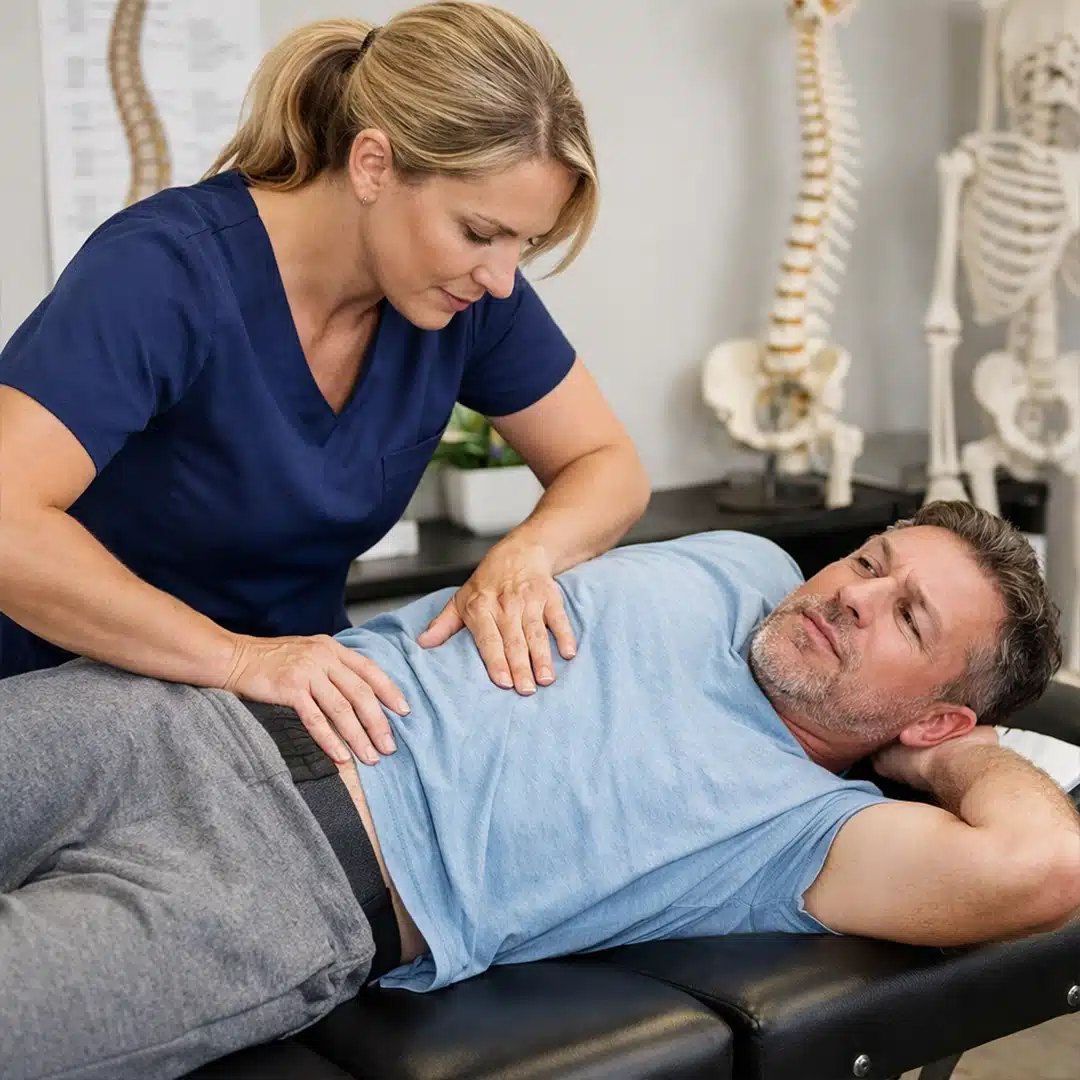
A herniated disc is a diagnosis that scares people — and understandably so. The image of a disc "slipping" or "bulging" against a nerve is genuinely alarming, and the symptoms (back pain, leg pain, arm pain, numbness, weakness) can be severe. But the important thing to know is this: the majority of herniated discs respond to non-surgical treatment.
Dr. Carol McNamara Krauss has been treating disc herniation in South Florida for over three decades, using the Spinal Decompression Program — a structured, multi-session protocol with the Antalgic-Trac® mechanical decompression system and Class IV laser therapy.
Understanding Disc Herniation
Your spinal discs are soft, shock-absorbing structures between each vertebra. Each disc has a tough outer ring (annulus fibrosus) surrounding a gel-like inner core (nucleus pulposus). Herniation occurs when the annulus develops a tear and the nucleus material protrudes — pressing against the spinal cord, nerve roots, or the outer pain-sensitive annular fibers.
Grades of herniation:
- Disc bulge / protrusion — Nucleus material presses the annulus outward but doesn't breach it
- Extrusion — Nucleus material pushes through the annulus but remains attached
- Sequestration — Fragment of nucleus material breaks free into the spinal canal
Common locations:
- Lumbar (L4-L5, L5-S1) — Most common. Produces back pain, sciatica, leg weakness, or foot numbness.
- Cervical (C5-C6, C6-C7) — Produces neck pain, shoulder pain, arm pain, hand numbness or weakness.
How the Spinal Decompression Program Addresses Disc Herniation
The Spinal Decompression Program targets disc herniation through mechanical decompression with the Antalgic-Trac® system.
When the distraction force is applied, intradiscal pressure drops significantly — in well-designed studies, to negative pressure. This creates a retraction force on extruded disc material and draws nutrients and fluid back into the dehydrated, degenerated disc tissue.
Class IV laser reduces inflammation at the disc-nerve interface, accelerating recovery of the irritated nerve root.
FAQs
Do I need surgery for a herniated disc? Not immediately — and often not at all. Surgery is generally reserved for progressive neurological deficits, bowel/bladder involvement, or failure of comprehensive conservative treatment. Many herniations resolve with proper non-surgical care.
I have an MRI showing herniation. Can you treat me? Yes. Bring your MRI to your first visit. Dr. McNamara reviews imaging and correlates it with your clinical presentation to develop the appropriate treatment plan.
How long does recovery take? Acute herniations with recent onset often improve significantly within 4–8 weeks of decompression treatment. Chronic disc problems take longer — a full 20-session course may be needed.
What about disc herniation from a car accident? Yes — traumatic disc herniation from auto accidents is treated here. We accept PIP insurance. See auto accident injury.
How do I get started? Call (954) 902-6371 or contact us. Also see sciatica treatment and back pain for related conditions.
Ready to Feel Better?
Call us today to schedule your consultation with Dr. Carol McNamara.